Saturday, December 5, 2015

Revisiting My Writing Process

'Ambernectar 13.' "Evie Looking in the Mirror" 4/11/2012 via flickr.
Attribution-NoDerivs 2.0 Generic License.
This post will be a reflection, looking back on the first impressions and plans of this semester, now that it is nearing the end.

In my first post, "my writing process," I talked about how I write very little, and how I'm not a particularly good writer, probably because of that. I feel that now, I'm a little better, as I have written so much this semester, and been forced into those other categories, by participating in pre-writing work and revisions. However, the core of my view hasn't changed: I still don't enjoy writing, and I've already reached the point where I can write well enough. For example, in my other classes (and these are college-level writing situations), I very easily just wrote in a stream of consciousness (no revisions or pre-writing work), and got all A's. By this I mean that, while I don't think I'm an exceptional writer, I have the skills I will actually need to apply in any situation outside of an English class.

*I don't mean to poop all over this class - regardless of my attitude, it was very successful in forcing me to grow as a writer. The practice analyzing and actively thinking through text I did will continue to benefit me whenever I need to write.*

In terms of my prediction and plan for time management that I talked about in my second post, "Calendar Reflection," I thought I might be proactive each week. It turned out that I did have as much time as I though I would, but I never felt like I did. Maybe college freedom made me spend way too much time on other things that I wanted to do - and not much of it was actually video games -  leaving me to do my homework for long periods of time. Ultimately I knew I might do all my work on Saturdays, as I implied with my tone in that post, But it all worked out all right.

For the future, I think, as I said, I'll be all right as far as writing goes. It might seem like my work ethic is trash, but I do enough work, and in subjects I have an interest (and no mental barriers stopping me from hating what I have to do), I have and will put in much more time and effort, because I choose to study those things.

Sunday, November 22, 2015

Reflection on Project 3

This post will go through a reflection, including what specifically I revised, and how it all went, as I completed project 3. It will take the format of a numbered list from Writing Public Lives.

Penaud,Georgia. "NICO looks at himself" 2006 via wikimedia. Public Domain.

1. What was specifically revised from one draft to another?

I mostly took some of the advise I got from the peer edits, a little at a time, and tried to work minor sentences to fit the feedback. In that sense, I added pictures and other elements to fit the genre better. I also felt like I got off track, but the edits brought me back, and I made the content relevant to a refutation argument.

2. Point to global changes: how did you reconsider your thesis or organization?

The main thing was staying true to my thesis throughout the op-ed. In doing this, it helped that other people read it, and could point out that I left it a bit, plus reading it myself after a week of having not thought about it helped.

3. What led you to these changes?

I guess just realizing that my thesis wasn't being adequately supported.

4. How do these changes affect your credibility as an author?

They should help to build it, as a well structured essay is always more convincing, as it sounds like it's coming from an intelligent person. On the other hand, if it's poorly constructed, a reader would probably assume a) the topic wasn't important enough to give full attention to detail, and b) the writer wasn't smart enough to structure it properly, so why is their input valuable?

5. How will these changes better address the audience or venue?

Since now the whole piece is structured properly, it is all aimed at the target audience, rather than just the first couple paragraphs, followed by some drifting, wandering, rambles about space.

6. Point to local changes: how did you reconsider sentence structure and style?

Mostly for clarification, I revised some sentences to make more sense, like "However, Money is money - nothing is special about that which is given to NASA." as opposed to just skipping to "just because that money isn’t being spent on Earth, or that it’s spatially the furthest from helping with those problems..." things like this, I think just make my point a bit clearer.

7. How will these changes assist your audience in understanding your purpose?

Hopefully, by eliminating the barriers (meaning confusing sentences, and unexplained ideas) to my audience, they can get a direct understanding of my argument, at which point it is up to if it is any good itself.

8. Did you have to reconsider the genre you are writing in?

I did, actually. I included captions for images, the font style, an end bio, and some other little things to make it look more like an LA Times op-ed.

9.How does the process of reflection help you reconsider your identity as a writer?

It forces me to be aware of the things I kinda just did on autopilot. I guess that's pretty helpful, as if I can control those things, I'll be able to write well without even trying. But, for the most part, it just shows me I've got a long way to go before that is possible.

Publishing Public Argument

This post will contain the link to my final version of my op-ed for the Washington post "“Why spend so much in space?” Here’s why." as well as a bit of accompanying information about it.

No Author "Win" 3/14/2014 via Pixabay. Public Domain.

1. Mark with an "x" where you feel your target audience currently stands on the issue below (space exploration BAD because Earth problems):
←-------------------------X--------------------------|--------------------------------------------------------->
Strongly                                            Totally neutral                                                    Strongly
agree                                                                                                                          disagree

2. Now mark with an "x" where you feel your target audience should be (after they've read/watched/heard your argument) below:
←----------------------------------------------------|--------------------------------X------------------------>
Strongly                                            Totally neutral                                                    Strongly
agree                                                                                                                          disagree

3. Check one (and only one) of the argument types below for your public argument:

         ___X__ My public argument openly refutes a specific solution or policy under debate (and clearly identifies the idea I'm refuting).

4. Briefly explain how your public argument doesn’t simply restate information from other sources, but provides original context and insight into the situation:

My argument, for one, acknowledges, and tries to respond to the emotional pull of not wanting to abandon those in need, by citing examples of how NASA also helps those in need. Also, I took the stance that agreed that those in need deserve help, but showed that it doesn't have any impact on whether or not NASA's funding is justified.

5. Identify the specific rhetorical appeals you believe you've employed in your public argument below:

Ethical or credibility-establishing appeals
                               Telling personal stories that establish a credible point-of-view

                    __X__ Referring to credible sources (established journalism, credentialed experts, etc.)

                    __X__ Employing carefully chosen key words or phrases that demonstrate you are credible (proper terminology, strong but clear vocabulary, etc.)

                    __X__ Adopting a tone that is inviting and trustworthy rather than distancing or alienating

                    __X__ Arranging visual elements properly (not employing watermarked images, cropping images carefully, avoiding sloppy presentation)

                                Establishing your own public image in an inviting way (using an appropriate images of yourself, if you appear on camera dressing in a warm or friendly or professional manner, appearing against a background that’s welcoming or credibility-establishing)

                                Sharing any personal expertise you may possess about the subject (your identity as a student in your discipline affords you some authority here)

                    __X__ Openly acknowledging counterarguments and refuting them intelligently

                    __X__ Appealing openly to the values and beliefs shared by the audience (remember that the website/platform/YouTube channel your argument is designed for helps determine the kind of audience who will encounter your piece)

                                Other: ---

Emotional appeals

                               Telling personal stories that create an appropriate emotional impact for the debate

                               Telling emotionally compelling narratives drawn from history and/or the current culture

                               Employing the repetition of key words or phrases that create an appropriate emotional impact

                    __X__ Employing an appropriate level of formality for the subject matter (through appearance, formatting, style of language, etc.)

                    __X__ Appropriate use of humor for subject matter, platform/website, audience ("appropriate" being not much at all)

                    __X__ Use of “shocking” statistics in order to underline a specific point

                    __X__ Use of imagery to create an appropriate emotional impact for the debate

                                Employing an attractive color palette that sets an appropriate emotional tone (no clashing or ‘ugly’ colors, no overuse of too many variant colors, etc.)

                                Use of music to create an appropriate emotional impact for the debate

                                Use of sound effects to create an appropriate emotional impact for the debate

                    __X__  Employing an engaging and appropriate tone of voice for the debate


                                 Other: ---

Logical or rational appeals

                               Using historical records from credible sources in order to establish precedents, trends, or patterns

                    __X__ Using statistics from credible sources in order to establish precedents, trends, or patterns

                                Using interviews from stakeholders that help affirm your stance or position

                                Using expert opinions that help affirm your stance or position

                    __X__ Effective organization of elements, images, text, etc.

                    __?__ Clear transitions between different sections of the argument (by using title cards, interstitial music, voiceover, etc.) - Maybe a text-based equivalent?

                    __X__ Crafted sequencing of images/text/content in order to make linear arguments

                    __X__ Intentional emphasis on specific images/text/content in order to strengthen argument

                    _N/A_ Careful design of size/color relationships between objects to effectively direct the viewer’s attention/gaze (for visual arguments)

                               Other: ---

6. Links to examples (OP-EDs from LA Times):

A common-sense solution to the Uber vs. taxi wars.

Think religion makes society less violent? Think again.

We should look less hard for cancer.


Sunday, November 15, 2015

Reflection on Project 3 Draft

This post is basically a progress report - for me, and for anyone who reads my posts - on where I stand for project 3. This means some details of what happened throughout the drafting process, and what's still left to do.

Longo, Wendy. "Looking Back" 5/13/2007 via flickr
Attribution NoDerivs 2.0 Generic License.
Firstly, I edited Katherine's and Mark's project 3 drafts. (the peer review sheets are here:
FOR KATHERINE  - - - -  FOR MARK)

     1. Who edited your draft?

Clay and Breanna peer edited my draft (shout out to them for braving that battlefield).

      2. How do you feel about the feedback you got? What helped, or was confusing?

Of course, any feedback and outside perspective are greatly appreciated, but what really helped is having specific areas to focus on, in terms of the structure, more than just simple rewording suggestions and other things of that sort. This helps the actual message instead of just the delivery (though that's important, too, but it doesn't require outside help as much). As for what was helpful, it pretty much all was, though the "audience" section is a bit confusing. I couldn't quite figure out how to judge the effectiveness of the argument on the audience specifically beyond if the argument was strong, but that was the main point of another section.

     3.What aspects need the most work for the final draft?

I could probably work on every aspect (and I'm going to, of course) but the audience section and genre section should be my main focus. I just felt that they were a bit lacking. As a part of that, I will also restructure it to flow more, as I felt a bit directionless while writing, so having some time away from it and coming back should fix that.

     4. How are you feeling overall about the direction of project 3?

I'm feeling like I can do this. At first I thought that an op-ed would be too short, or it would have to be too dense with vital things to say that I wouldn't be able to manage, but the peer reviews gave me hope that I will be able to manage it.

Sunday, November 8, 2015

Draft of Public Argument

This post serves primarily as a link to my project 3 draft, my public argument on space exploration. It's still a draft, so, you know, it's not that great. But it's an op-ed, so it should be a bit short,and be opinionated, but if it is too short or opinionated, that's not good either. (also, the title could use some help)

Children drawing. "Pegasus with large mane" 4/7/2015 via torange
Attribution 4.0 International License.
Much like this drawing, my draft's got some basic shape, and just needs a good finishing, and it'll be in a museum in no time.

Considering Visual Elements

This post will be about the visual elements  might consider including in my op-ed for project 3.


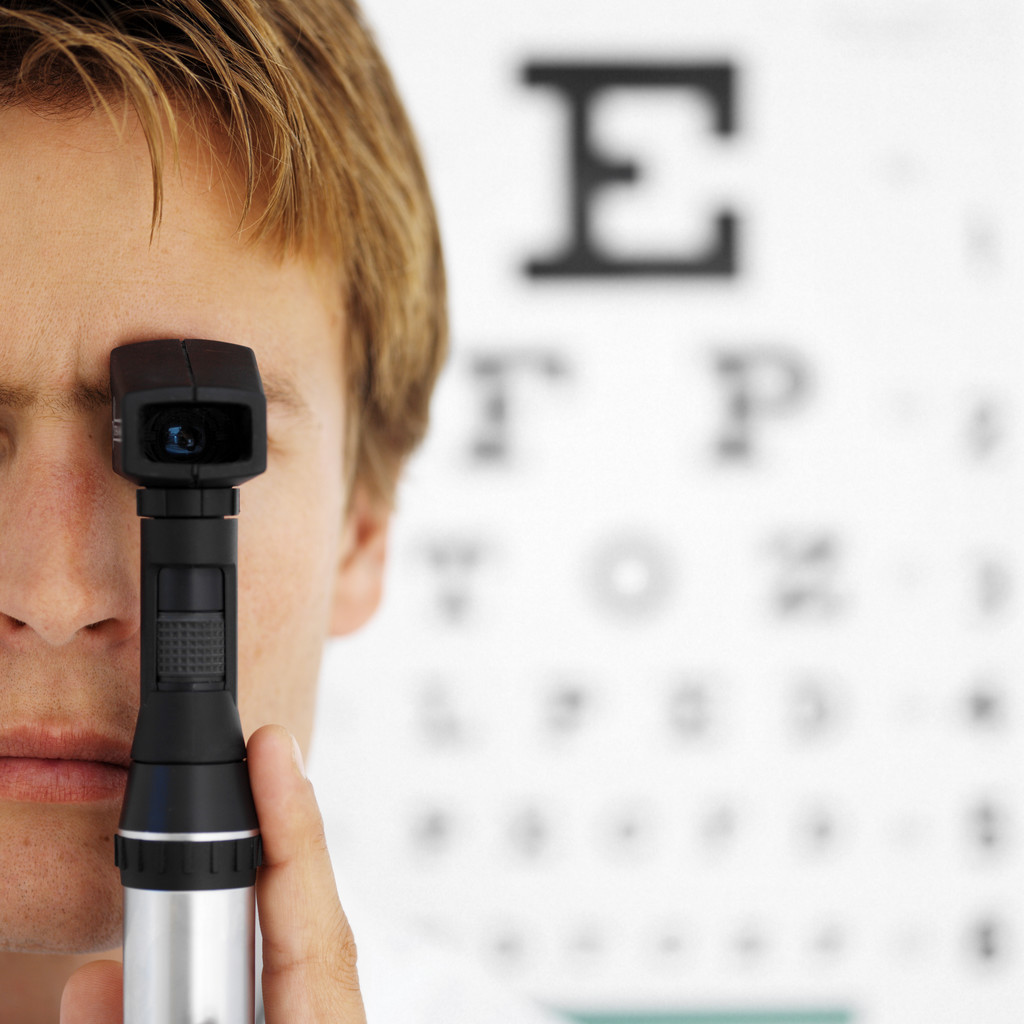
Black, Les. "Boy Testing Eye Site" 4/20/2013 via flickr.
Attribution-ShareAlike 2.0 Generic License.
1. Is the theme or association that the image produces relevant to the theme of my argument?

I could definitely include an image that connotes the type of pathos that people think of when they think of Earthly problems. This way I could remind my readers why I'm writing about the disconnect between that and funding for space exploration.

2. Does the graph or chart clearly support a major point of my argument?

If I include a graph, it will probably be one showing the comparisons of national expenditures, which would support the point that NASA doesn't actually spend much, and that there are other programs that could be seen as more frivolous.

3. Is the image in close proximity to the argument that it is emphasizing?

I'll definitely put the images close to the points they illustrate. It only makes sense that they would go there, so the continuity isn't lost between ideas.

4. Do your eyes move easily from one section to another in the order you intended?

I don't think this will be too much of an issue, as it will mostly be a single-column body of text. However, I should make efforts to have the final design clear and flowing.

5. If your project contains large blocks of text,  could they be broken up more effectively using text boxes, lines, headings, or images?

This is another thing I shouldn't have to worry about, the op-ed being a fairly short genre. However, I definitely don't want to go overboard, like I felt example 2 from my earlier post did. I just felt that there were too many images, and it looked a bit crowded. This is something I'll make sure to avoid.

6. Are your images placed or sequenced in the most convincing way?

I hadn't thought about the sequence of introducing the images, but I'll keep it in mind. I think introducing the pathos first, before showing it's disconnected, will be a good order. A second pass afterward, though, might be helpful.

Project 3 Outline

This post will outline the content I'll need to include for project 3.

'gfpeck.' "Extra, Extra!" 7/30/2010 via flickr
Attribution-NoDerivs 2.0 Generic License.
Introduction:

1. Connect the issue to your audience's world view:

This should be easy, because I'm trying to target people who currently think that the Earth is in too bad of a shape to fund space exploration. I can start off by acknowledging that point, and saying, "yes, it absolutely is, and people need to do stuff about it." But also, I can list off some of the ways space exploration has helped people in the past.

Body:

1. List out the major supporting arguments:

NASA's allowance is under one and a half a percent of the national budget (most people probably think it is a lot more).

There are other government programs, despite the amount of money they receive, that most would argue are more wasteful than NASA (so going after NASA is a bad place to start).

The nature of how the money is spent (off earth, whereas there are problems on earth), while rhetorically appealing (it sounds cool to say "why spend money in space when there are problems on Earth?"), doesn't matter.

2. List down major criticisms:

I honestly can't think of any beyond the emotional appeal of "it doesn't help those in dire need of help."

I guess someone could say that they really don't have any interest in anything beyond Earth, which is a valid opinion.

17 billion dollars a year is a lot of money.

3. Select your key support and rebuttal points.

I'll include all of them. They are all pretty important, and the rebuttal points I have there are all I could think of.

4. Write out a tentative topic sentence for each point:

+
NASA's annual budget is far lower than most people think.

NASA is not the program to cut.

We need to keep in mind what really matters when it comes to spending.

-
Absolutely, there are people in need of help, and money can go a lot of the way in helping.

It's possible that some think space exploration is a waste of time for no other reason than that it doesn't interest them.

NASA costs a lot of money to run.

5. Gather evidence:

Global crises:
http://www.globalresearch.ca/the-global-crisis-food-water-and-fuel-three-fundamental-necessities-of-life-in-jeopardy/9191

National budget:
https://www.whitehouse.gov/sites/default/files/omb/budget/fy2015/assets/budget.pdf

6. Map
This is the coggle map I made to guide my writing of project 3
Conclusion:

4. Common ground:

Definitely common ground, because I absolutely agree that people need to do something about the rampant poverty, hunger, war, etc. that humans face. It's only that I don't think that cutting space exploration is the way to get the money for that.